chat-on-WhatsApp
Laptop

Hide API Key – Secure API Key Management Platform

Website

React.js

Cybersecurity

Solution Provide

Project

Overview

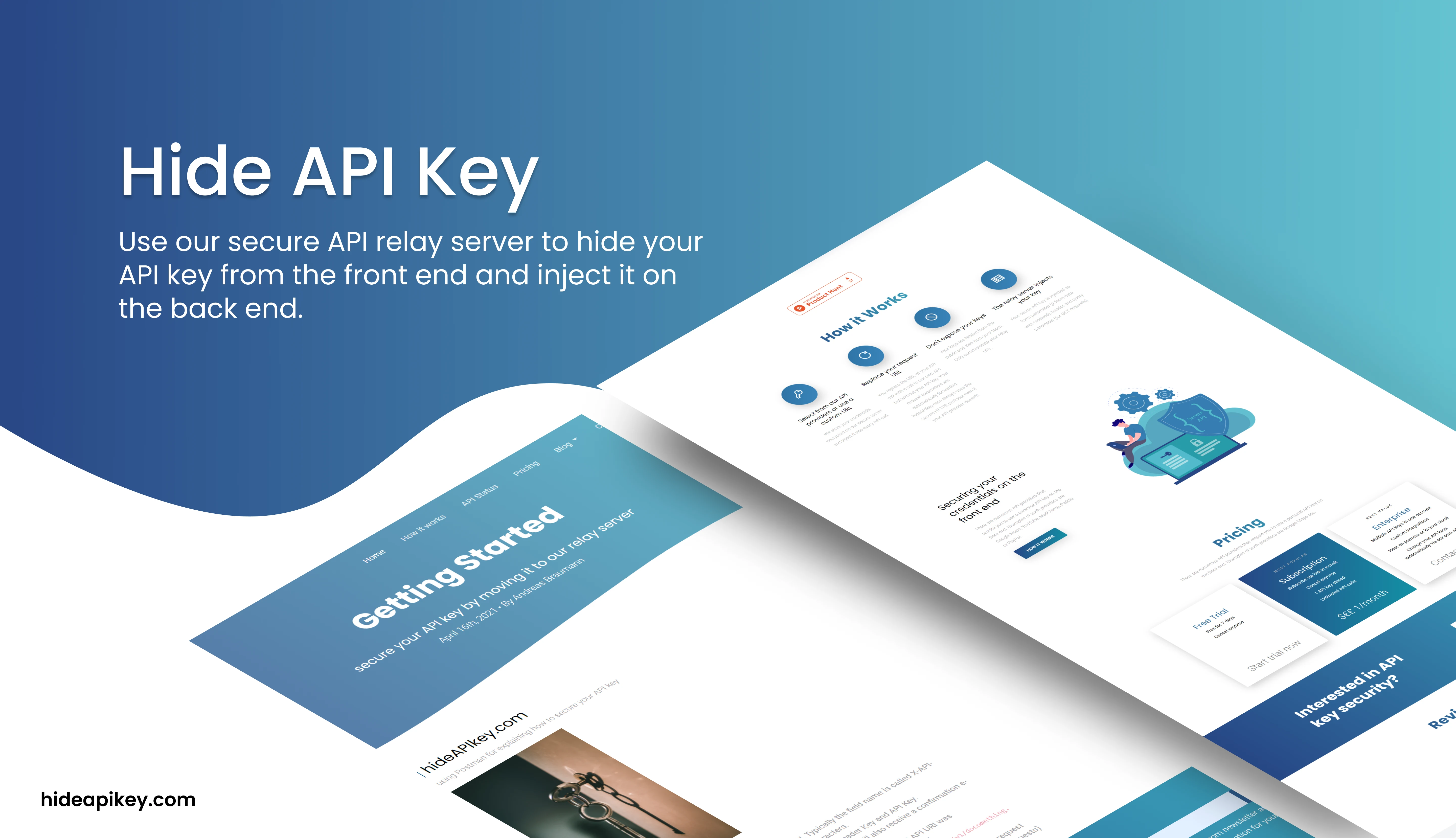
HiddenKey is a powerful encryption-based platform designed to secure, store, and manage API keys and sensitive credentials for developers and organizations. Built with a focus on zero-trust architecture, military-grade encryption, and high-performance delivery, HiddenKey helps businesses integrate sensitive keys across environments with confidence — whether for local development, staging, or production.

Features Implemented

APIs are the backbone of modern applications — and securing access credentials is often overlooked. Hardcoded keys, poorly managed .env files, and lack of rotation can lead to breaches, data leaks, and compliance issues. HiddenKey solves this by giving businesses a centralized, secure, and scalable solution for managing API keys — no more secrets in code.

Role-Based Access Control (RBAC)

  • Assign roles (Admin, Developer, Read-only) with fine-grained permissions.
  • Limit access to certain environments or key sets.

API & SDK Integration

  • RESTful API and GraphQL endpoints for secure integration.
  • Developer SDKs for Node.js, Python, Go, etc.
  • CLI tool for CI/CD pipeline and local development integration.

Usage Analytics & Alerts

  • Real-time dashboard showing key access frequency, IP locations, and errors.
  • Alerting system for unusual activity or unauthorized access attempts.

Development

Challenges & Solutions With Results

Challenges & Solutions

  • Ensuring Unbreakable Security Without Slowing Developers Down.
  • Built a client-side encryption system that automatically secures keys before they leave the user’s device. Paired with an SDK for frictionless integration into local and CI/CD workflows.
  • Handling Secure Key Access Across Global Environment.

Results & Impact

  • 100% of keys stored encrypted-at-rest and in-transit.
  • 80% reduction in key-related security issues in development pipelines.
  • +65% patient retention due to smooth booking and follow-up mechanisms
  • Improved deployment hygiene and access accountability.

Tech Stack


  • Frontend ( Angular / React )
    • Component-based architecture for modularity and scalability.
    • Reactive forms and two-way data binding for form-heavy workflows ( e.g., appointments, prescriptions ).
    • Lazy loading and route guards for performance and security
    • Progressive Web App (PWA) support for mobile access
  • Backend ( Node.js )
    • Lightweight and flexible routing.
    • Middleware support for authentication, logging, and error handling.
    • RESTful and GraphQL APIs to support both web and mobile apps.